







- Where
- Córdoba, Andalusia
- Directions
- Directions
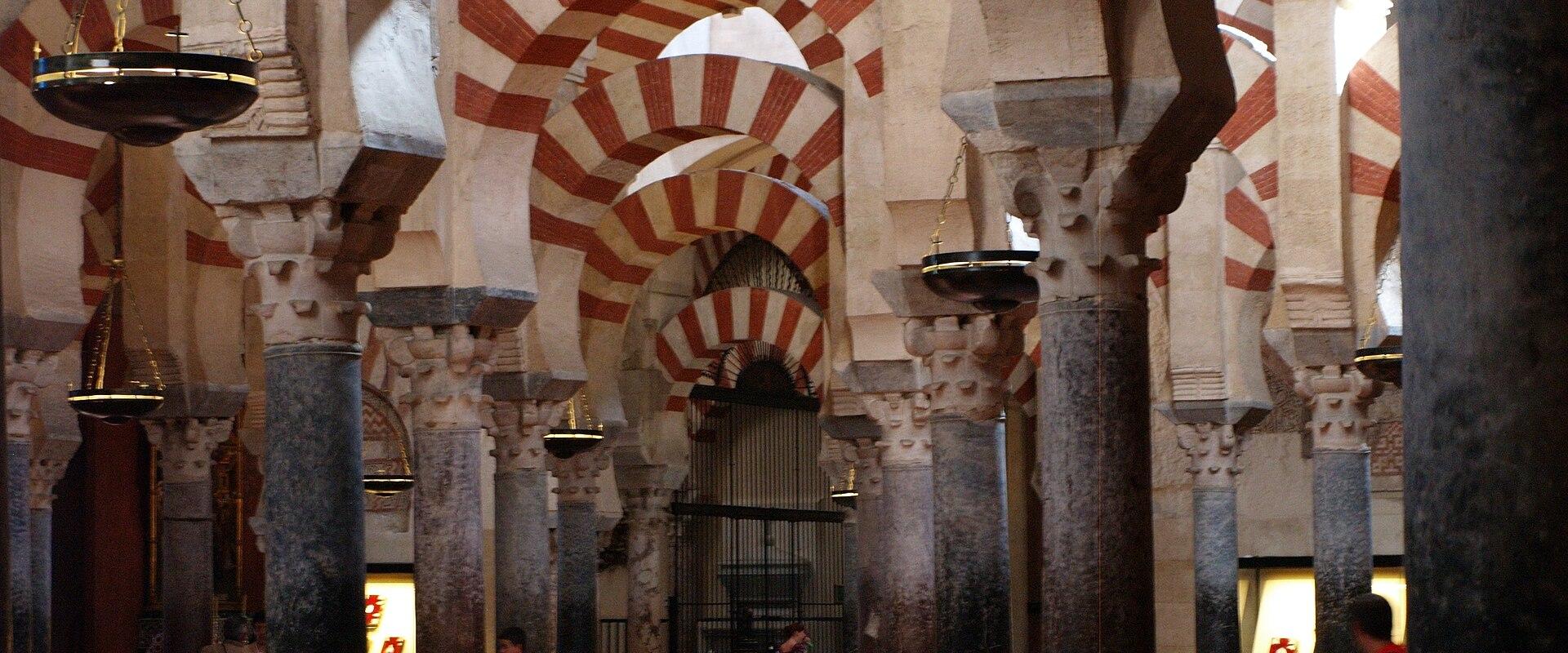
The Mezquita-Catedral of Córdoba is one of the most extraordinary buildings in the world, a vast mosque that became a cathedral and still bears the marks of both faiths. It was begun in the year 785 or 786 by the emir Abd al-Rahman I, the Umayyad prince who had fled from Damascus and established an independent state in Al-Andalus, on the site of a Visigothic church. The mosque was enlarged three times by his successors, in the ninth and tenth centuries, each time to match the growing population of the capital of Muslim Spain, until it became one of the largest in the Islamic world. UNESCO added it to the World Heritage list in 1984, and the historic centre of the city was added later.
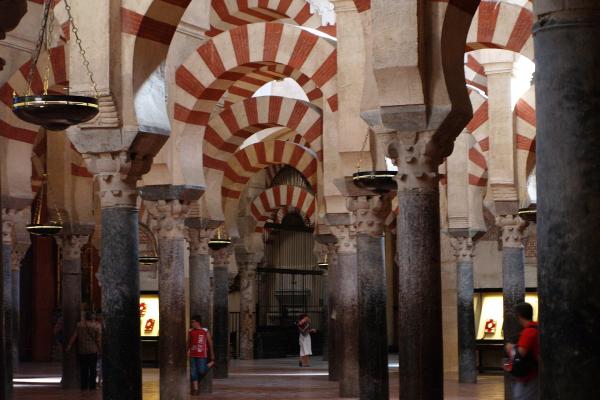
The interior is the famous sight. A forest of columns, close to nine hundred of them, made of marble, jasper and granite, many reused from Roman and Visigothic buildings, supports a double tier of arches built of alternating red brick and white stone. The stripes of colour repeat endlessly into the half-light, creating an impression of infinite space and rhythm that is unlike any other building. The prayer hall was designed so that worshippers could stand in a long line, shoulder to shoulder, and the repetition of the arches was both a structural solution and a visual effect. The oldest section, from the late eighth century, has the simplest forms, while later additions became more elaborate.
The mihrab, the niche that marks the direction of prayer, is the masterpiece of the tenth-century extension under Caliph al-Hakam II. It is a small chamber framed by a horseshoe arch, covered with golden mosaics made by craftsmen sent from Byzantium, and topped by a shell-like vault carved from a single block of marble. The ribbed domes in front of it, with their interlaced arches, are among the most sophisticated works of Islamic architecture of the period.
After the Christian conquest of Córdoba in 1236, the mosque was consecrated as a cathedral, and for centuries, the changes were modest. In the sixteenth century, however, the chapter built a Renaissance cathedral nave in the very centre of the forest of columns, with a high vault, a choir and a rich Baroque decoration. Emperor Charles V, who had authorised the project, is said to have regretted it on seeing the result. The contrast between the two styles inside one building is startling, and it is the reason the building is so thought-provoking. The bell tower, a seventeenth-century structure built around the old minaret, rises beside the Patio de los Naranjos, the orange-tree courtyard that was the ablutions court of the mosque.
The visit takes about two hours, and the tower can be climbed at certain times. It suits everyone, and tickets should be booked ahead in busy periods, as the cathedral also holds services and has limited visiting hours. The Alcázar of the Christian Kings, the Calleja de las Flores and the Patios of Córdoba are nearby.
Categories
More photos coming soon
Nearby Attractions
Other places to visit in Córdoba

Mercado Victoria
Architectural Heritage · Historic Districts
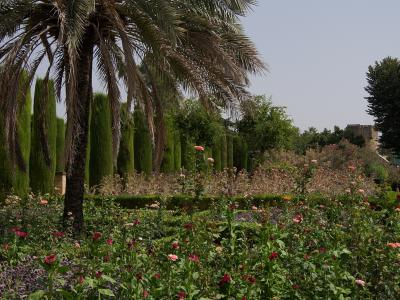
Alcázar Of The Christian Kings
Medieval fortress and palace in Córdoba
Architectural Heritage · Castles
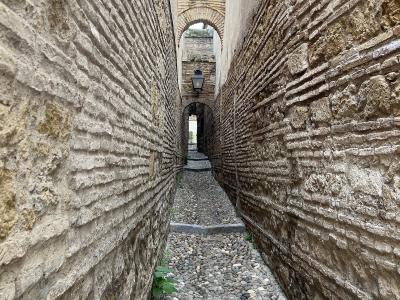
Alley Of The Arquillos (Callejón De Los Arquillos)
Non-walkable medieval alley with seven arches
Historic Heritage · Urban Exploration
Calleja De Las Flores
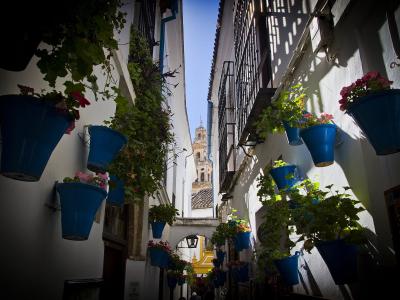
Narrow alley with white walls and flower-balconies
Free Historic Districts · Urban Landmarks
Questions people ask
Quick Facts
Best Time to Visit
May through June and September offer mild weather, ideal for exploring the city.