







Camino de Santiago (St. James Way)
- Where
- Santillana Del Mar, Cantabria
- Directions
- Directions
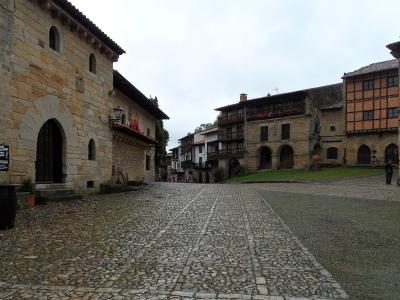
Santillana del Mar sits in the western part of Cantabria, a few kilometres inland from the coast, and it lies on the Camino del Norte, the Northern Route to Santiago de Compostela that follows the Cantabrian shore. The village grew around a monastery that housed the relics of Saint Juliana, and its name is often explained as a corruption of Santa Illana. A well-known saying calls it the town of three lies, because it is neither holy, nor flat, nor by the sea, which makes visitors smile on arrival. The old centre is protected, and most of the main street is closed to traffic, so you explore on foot over cobblestones.
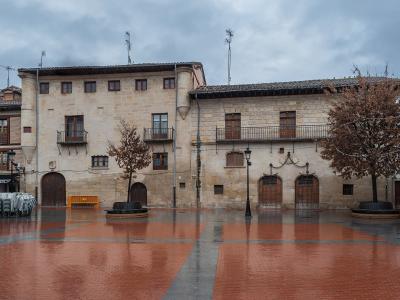
The village is made up of stone houses of the fifteenth to eighteenth centuries, many of them with coats of arms carved over the doors and wooden balconies. The buildings are typical of northern Spain: sturdy, with warm-coloured stone and tiled roofs, and the lanes remain very quiet outside the main holiday periods. The Plaza Mayor, a sloping open space framed by towers and noble houses, is the main gathering point, and nearby palaces such as the Palacio de los Velázquez de Medrano, also known as the Casa de las Cadenas, give a sense of the families who built the town. Hostels and small guesthouses occupy some of the old mansions.
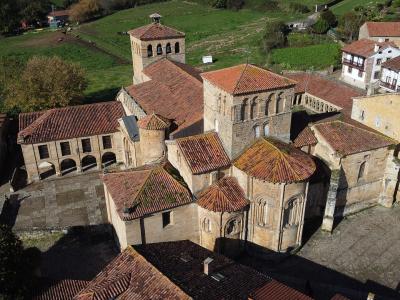
The centrepiece is the Collegiate Church of Santa Juliana, a Romanesque building from the twelfth century. Its cloister is especially valued, with capitals carved with figures, animals and scenes from the Bible, and the church holds the tomb of Saint Juliana. The building shows the monastic origins of the town and the importance of the pilgrim route in the Middle Ages.
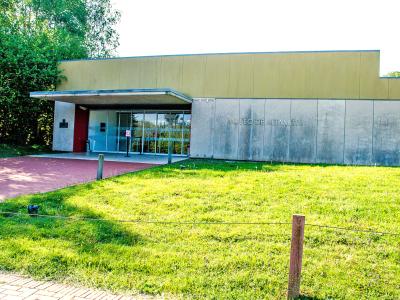
Just outside the village is the Museo de Altamira, which presents the Altamira Cave, famous for its prehistoric paintings of bison. The original cave is very restricted to protect the paintings, and visits are limited and by special arrangement, but the museum has an accurate replica, called the Neocueva, which gives a close sense of the paintings. This is the usual way to see the art.
Local food includes sobaos and quesada, traditional pastries from the Pasiego valleys, along with anchovies and cheese from the region. Santillana del Mar is reached by car from Santander in around half an hour, and by bus, and Bilbao is within about ninety minutes. The Parque de la Naturaleza de Cabárceno, a wildlife park, is also within reach.
The village is best seen early or late in the day, when the day-trip crowds have left. Wear sturdy footwear for the cobbles, and expect to walk a lot.
Categories
More photos coming soon
Nearby Attractions
Other places to visit in Santillana Del Mar
Questions people ask
Quick Facts
Best Time to Visit
May through September offers mild weather, ideal for exploring the historic town.