







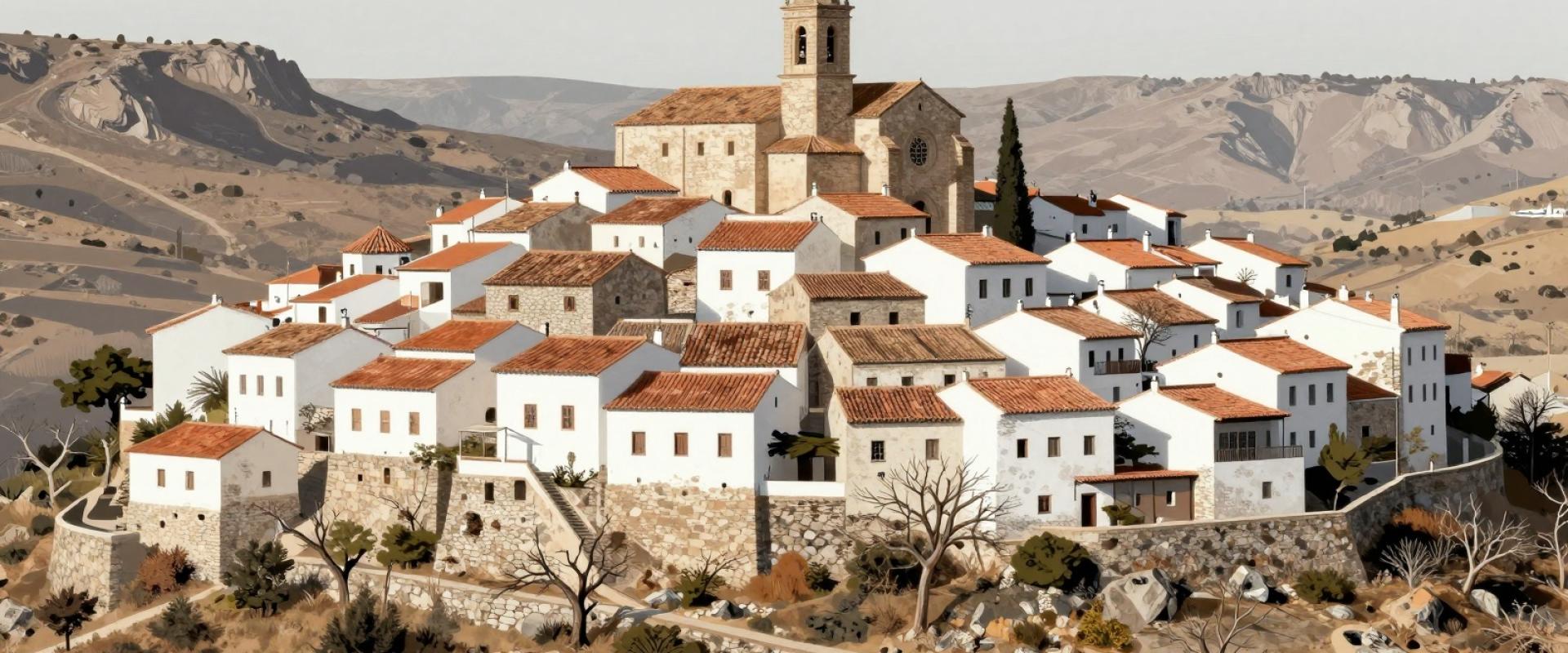
Casco Histórico (Old Town)
- Where
- Teruel, Aragon
- Directions
- Directions
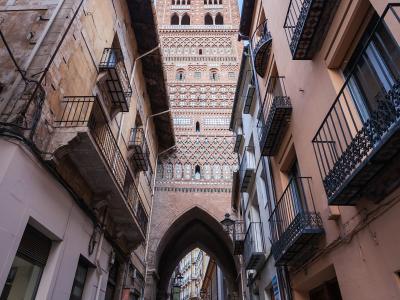
The old town of Teruel sits on a hilltop in southern Aragon, at an altitude of over nine hundred metres, and it is known for a group of Mudéjar monuments that are among the most beautiful in Spain. Teruel is one of the least populated provincial capitals in the country, and its old centre is compact, so it can be explored on foot in a day. The streets curve and climb around a few small squares, with brick and stone houses, wrought-iron balconies and churches with towers that show the Muslim craftsmen's influence in their decoration. The mix of Islamic and Christian styles is the character of the town.
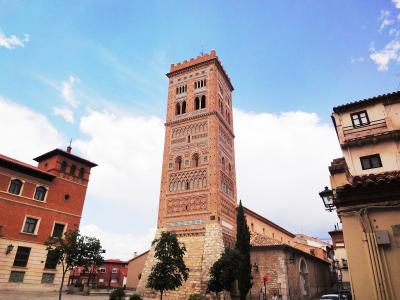
The cathedral, the Catedral de Santa María de Mediavilla, is the main sight. Its tower, in brick and glazed ceramic, is part of the UNESCO World Heritage listing for the Mudéjar Architecture of Aragon, and inside, a wooden ceiling covered with painted scenes from the late Middle Ages, one of the most remarkable of its kind in Europe, shows daily life, legends, fantastic creatures and nobles in a riot of colour. The ceiling is best seen from a scaffold-like walkway that allows a close view. Other Mudéjar towers, those of San Martín and El Salvador and the tower of San Pedro, stand within a few minutes of each other, and each has its own pattern of brick and tile.
At the centre of the old town is the Plaza del Torico, named after a small bronze bull on a column at its centre, which is the symbol of the city. Around it, a number of Modernist, or Art Nouveau, buildings of the early twentieth century, with decorated façades and balconies, give the square an elegant air. A monumental neo-Mudéjar staircase, the Escalinata, built in the 1920s, leads down from the old town toward the railway station and imitates the style of the old towers. Cafes and restaurants line the plaza and the streets nearby.
Teruel is also the city of the Lovers, a medieval legend about Diego and Isabel, a young couple who died of love and sorrow, whose mummified bodies are said to rest in a mausoleum beside the church of San Pedro. The mausoleum, built in the mid-twentieth century and decorated in an Art Nouveau-inspired style, includes a sculpture of the lovers by Juan de Ávalos. The city celebrates the legend each February, with a medieval festival. Teruel is also known for its cured ham, which carries a protected designation of origin.
The old town also holds the Museo de Teruel and the Museo de los Dinosaurios de Teruel, a nod to the area's rich fossil record. It suits architecture and history lovers, and walking is the best way to see it. Entry to the cathedral and some monuments requires a ticket, and the town is best in the morning and late afternoon.
Categories
More photos coming soon
Nearby Attractions
Other places to visit in Teruel
Questions people ask
Quick Facts
Best Time to Visit
June through September offers warm, dry weather ideal for exploring the historic center.