







Iglesia de San Martín
- Where
- Teruel, Aragon
- Directions
- Directions
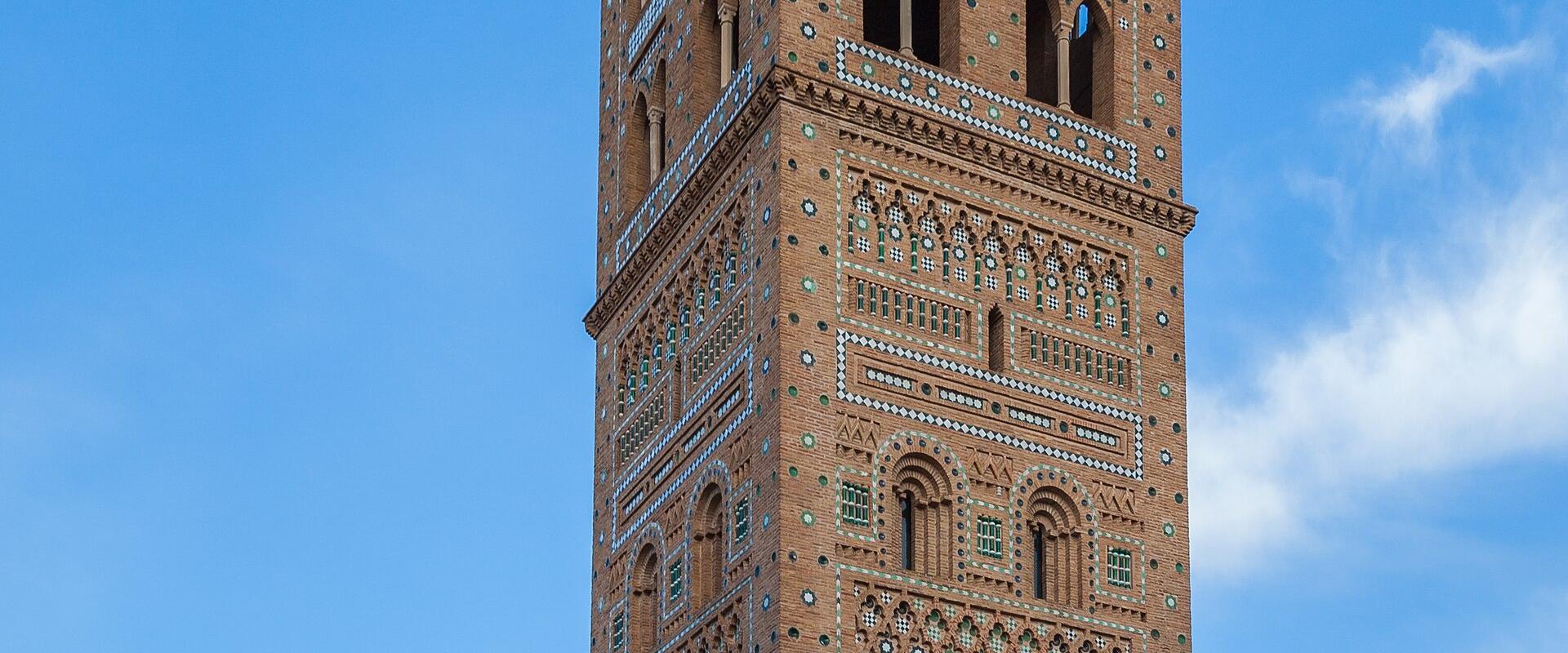
The Iglesia de San Martín is one of the great monuments of Teruel's Mudéjar heritage, a city in Aragon that has some of the finest examples of this style in Spain. Mudéjar is the art that arose when Muslim craftsmen, who stayed in Christian territory after the Reconquista, built for Christian patrons, and in Teruel it took the form of brick towers decorated with ceramic tiles and geometric patterns. Several Mudéjar monuments of the city, among them the towers of San Martín and El Salvador, the cathedral with its tower and painted ceiling, and the tower of San Pedro, belong to the UNESCO World Heritage listing for the Mudejar Architecture of Aragon.
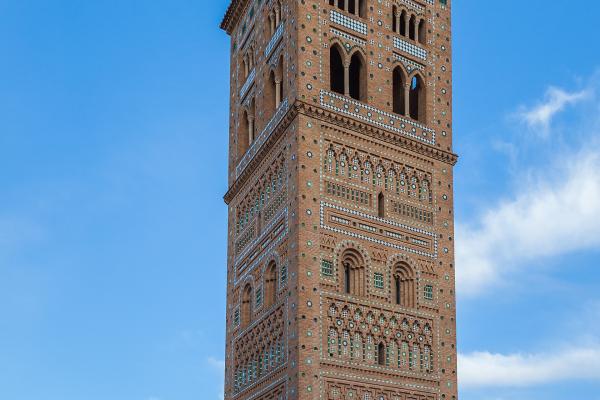
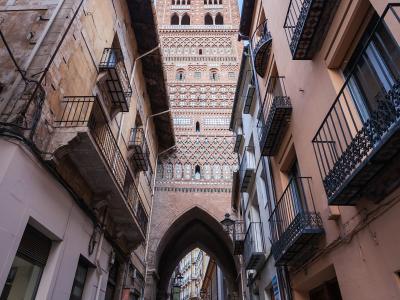
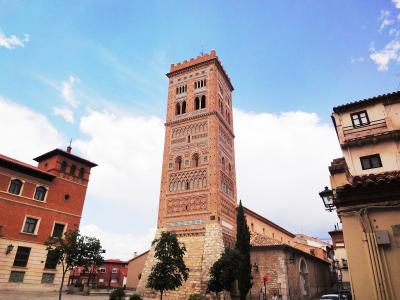
The tower is the oldest and most celebrated part of the church. It was built in the early fourteenth century, around 1315, on a square plan, and it rises in several stages decorated with brick patterns, blind arches and bands of green and white ceramic tiles. At its base, there is an arched passage that allows the street to run through the tower, a feature that Teruel's towers share. The effect is of a richly woven surface, with shadows and light moving across it through the day, and it contrasts with the plain walls of the church beside it. Nearby stands the Torre del Salvador, a related tower, and the pair are best compared on the same walk.
The church itself was largely rebuilt in the seventeenth century, which explains the difference between the medieval tower and the later body. Inside, the church has a spacious plan with three aisles and an ambulatory, covered with vaults, and the light enters through small windows, giving a calm interior. Decorative details of the period appear in the vaults and chapels, and the walls are largely plain. Mudéjar elements survive in the brickwork and in some decorative features, and a visit gives you a chance to see how builders combined different traditions.
The church stands in the Plaza Pérez Prado, close to the centre of the old town, with the Plaza del Torico, the social centre of Teruel, a short walk away. The Iglesia de Santa María, the cathedral with its celebrated Mudéjar tower and painted ceiling, the Museo de Teruel and the Museo de los Dinosaurios de Teruel are among the other stops in town. Teruel is also known for the legend of the Lovers, and for its cured ham.
The visit is short, and it suits architecture and history fans. Check access and opening times at the tourist office, as the interior is not always open.
More photos coming soon
Nearby Attractions
Other places to visit in Teruel
Questions people ask
Quick Facts
Best Time to Visit
June through September offers warm, dry weather ideal for exploring the historic center.