How Christmas Works in Madrid
Christmas in Madrid runs longer than in many European cities. The lights go up in late November, the markets open around the same time, and the season does not end on 25 December but on 6 January, the feast of the Epiphany, when Spanish children traditionally receive their presents from the Three Kings. The busiest moments are the weekends of December, New Year's Eve and the evening of 5 January. The city publishes its full programme on its official tourism site, esmadrid.com, usually in November, and dates shift slightly each year.
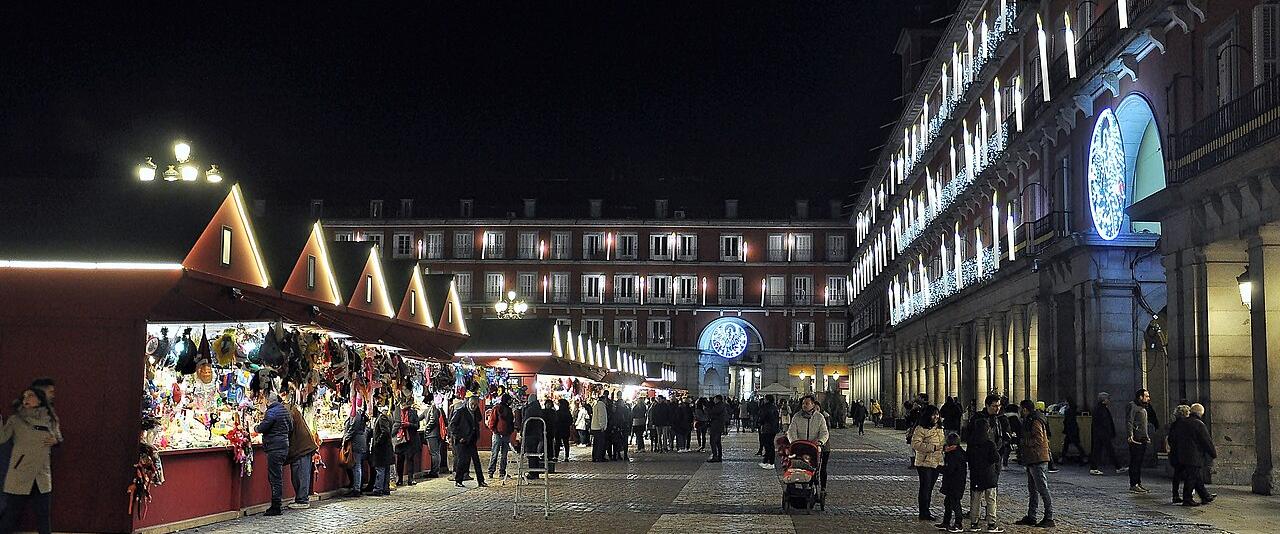
The Plaza Mayor Christmas Market
The best-known market is in Plaza Mayor, where a Christmas fair has been held for well over a century. In 2025 it ran from 27 November to 31 December with around a hundred stalls, opening daily from 10:00 until the evening. The stalls focus on nativity figures and accessories (from small clay figures to moss, miniature houses and lights), decorations, and joke-shop items such as wigs and novelty hats. That last category exists because of 28 December, the Día de los Santos Inocentes, Spain's equivalent of April Fool's Day.
It is a traditional market rather than a food-and-mulled-wine one. For food, the bars around the square are known for calamari sandwiches (bocadillos de calamares), and the area has several old pastry shops selling seasonal sweets.
Other Markets and Fairs
- Feria de Artesanía de Madrid. The city's Christmas crafts fair, with ceramics, leather, jewellery and textiles by working artisans. It used to be held in Plaza de España but has moved to Paseo de Recoletos; in 2025 it ran through most of December.
- Plaza de España. After its redevelopment, the square has hosted a seasonal market with an ice rink in recent years.
- Neighbourhood markets. Smaller stalls appear in squares across the city, and the market halls such as San Miguel and San Antón add seasonal products.
Nativity Scenes (Belenes)
Nativity scenes are central to a Spanish Christmas, and Madrid's institutions set up large ones that are free to visit. The Real Casa de Correos, the regional government's building on Puerta del Sol, traditionally hosts one, as does the city hall at the Palacio de Cibeles, alongside displays in churches and cultural centres. Expect queues on December weekends; weekday mornings are quieter. The city usually publishes a list of belenes with addresses and opening hours each season.
Madrid's Christmas lights are spread across the centre, with the main concentrations around Puerta del Sol, Gran Vía, Calle Preciados, Calle Alcalá and the Salamanca district shopping streets. Walking from Sol along Preciados to Gran Vía and then down Alcalá to Cibeles covers many of them in an hour.
The Naviluz is an open-top bus tour of the lights run each season, departing from Calle Felipe IV near the Prado Museum. Tickets are sold online in advance and popular evening slots fill quickly. There are no departures on 25 December or 1 January.
A long-running family tradition is Cortilandia, an animated display with music on the façade of the El Corte Inglés department store on Calle Preciados, with several shows a day during the season.
New Year's Eve and Three Kings
On 31 December, crowds gather in Puerta del Sol to eat twelve grapes, one on each of the twelve chimes of the clock on the Real Casa de Correos at midnight, a ceremony broadcast live on national television. Access to the square is controlled and capacity is limited, so arrive early and expect security checks. Many people practise with the "pre-uvas" chimes on 30 December, which are less crowded. Supermarkets sell tins of peeled, seedless grapes for the occasion.
The Cabalgata de Reyes, the Three Kings parade, crosses central Madrid on the evening of 5 January with floats, music and sweets thrown to the crowd; it typically follows the Paseo de la Castellana and Paseo del Prado towards Cibeles. The next day, 6 January, is a public holiday, when families eat roscón de reyes, a ring-shaped sweet bread with candied fruit that contains a small figure and a dried bean. Bakeries take orders in the days before.
Practical Tips
- Shops and museums. Many shops close or shorten hours on 24, 25 and 31 December and on 1 and 6 January; museums also change their schedules, so check before planning those days.
- Weather. December days are often clear but cold, with temperatures close to freezing at night.
- Crowds. The centre is very busy on December weekends and before the Three Kings; the metro is usually faster than taxis.