The Bay and the Beach
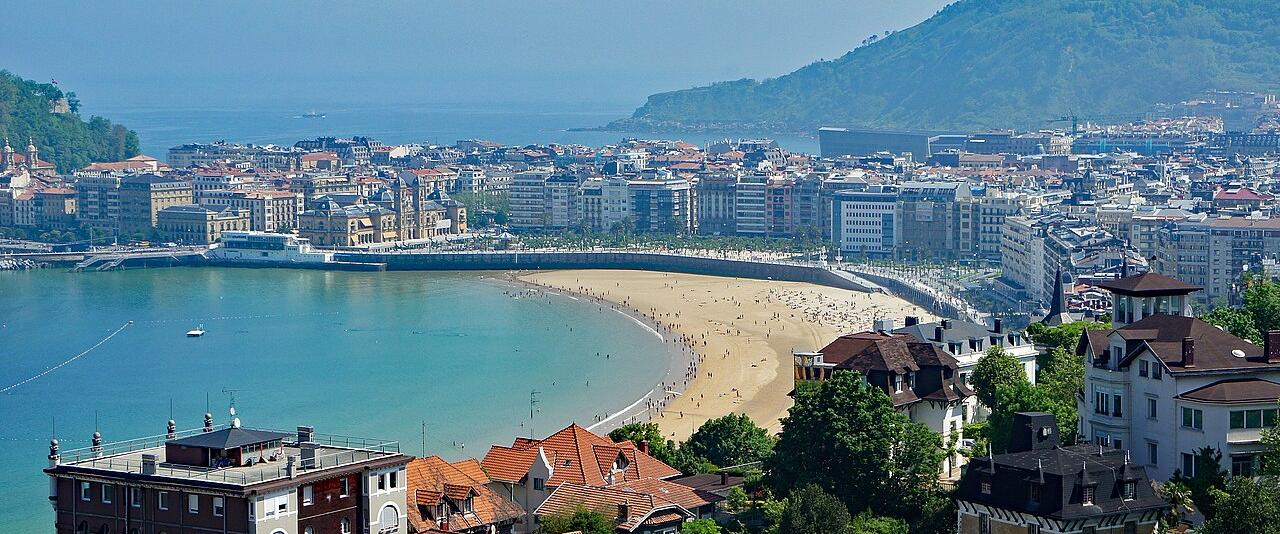
La Concha (Kontxa in Basque) is the crescent-shaped beach on the Bay of La Concha in the centre of San Sebastián (Donostia). The name comes from its shell-like outline. The bay is almost closed by two hills, Monte Urgull to the east and Monte Igueldo to the west, with the small island of Santa Clara between them, which is why the water inside is usually calmer than on the open Atlantic coast. It is regularly described as one of Europe's finest urban beaches.
The bay actually holds two beaches separated by a rocky outcrop near the Miramar Palace: La Concha itself, running from the old town to the palace, and Ondarreta, which continues west towards Monte Igueldo. A third city beach, Zurriola, faces the open sea on the other side of the river Urumea in the Gros district.
Tides and Swimming
The beach is sandy with a gently shelving bottom, and the tide makes a big difference. At high tide the sand narrows considerably, and on some high tides little dry beach is left near the promenade. At low tide the beach is wide and the walk across it is long. Tide tables are posted locally and published online; check them before choosing a spot to spread out.
In summer, lifeguards supervise the beaches and fly coloured flags for sea conditions. Swimming platforms are anchored in the bay during the season, and swimming out to them is a local habit. Water temperatures are those of the Bay of Biscay: cool even in summer compared with the Mediterranean. Outside the summer season, early-morning swimmers still use the bay year-round.
The Promenade
Above the beach runs the Paseo de La Concha with its white wrought-iron railing, a symbol of the city that appears on souvenirs and city publicity. The walk from the old town along La Concha and Ondarreta to the end of the bay takes around 40 minutes at a steady pace and is flat throughout.
Along the way:
- La Perla, a historic bathing establishment on the beach, now a thalassotherapy spa.
- Miramar Palace, a former royal summer residence with public gardens on the low hill between La Concha and Ondarreta.
- Peine del Viento (Comb of the Wind), Eduardo Chillida's 1977 iron sculptures set into the rocks at the far western end of Ondarreta, where waves blow through holes in the paving on rough days.
Santa Clara Island
Santa Clara island sits in the mouth of the bay. In summer small passenger boats run to it from the fishing port at the foot of Monte Urgull. The island has a small beach that appears at lower tides, picnic areas, a lighthouse and paths to the top with views back over the city. Strong swimmers sometimes swim out from the beach, but this should only be done in calm conditions and with care, as there is boat traffic in the bay.
Viewpoints: Igueldo and Urgull
The classic view of the bay is from Monte Igueldo, reached by a funicular railway that has operated since 1912, starting near the western end of Ondarreta. At the top is a small, old-fashioned amusement park and a viewpoint over the entire bay.
Monte Urgull, at the eastern end next to the old town, is a wooded park reached on foot by paths from the port and the old town. Its summit has the remains of the Castillo de la Mota and a large statue of the Sacred Heart, and it has views over both the bay and the open sea. The climb takes around 20 to 30 minutes.
Zurriola and Ondarreta Compared
- La Concha is central, busiest, and best for swimming in calm water.
- Ondarreta is usually a little quieter and popular with families from the nearby residential area.
- Zurriola, facing the open sea, has more waves and is the city's main surfing beach, with surf schools; it is also more exposed in rough weather.
Practical Tips
- Getting there. The beach is right in the city centre and walkable from the old town; city buses run along the promenade.
- Food. The Parte Vieja (old town), behind the eastern end of the beach, is full of pintxos bars.
- Season. July and August are crowded; June and September often have good weather with more space.
- Rain. The Basque coast is changeable, so bring a light layer even in summer.
- Events. The Regatta of La Concha, the traditional rowing race in trainera boats, takes place in the bay on the first two Sundays of September and draws big crowds.