Where they are
Ronda sits on a plateau in the mountains of Málaga province, split in two by El Tajo, a gorge cut by the Guadalevín River. Just to the west, across the provincial border in Cádiz, lies the Sierra de Grazalema Natural Park, a limestone range of about 51,700 hectares. The two are close enough to combine in a single trip of three or four days, and together they offer a different side of Andalusia from the coast and the big cities.
Ronda: the gorge and the bridges
The gorge is about 120 metres deep and is crossed by three bridges. The largest, the Puente Nuevo, links the old Moorish town (La Ciudad) with the newer district (El Mercadillo). Its construction began in 1759 and was finished in 1793, after an earlier bridge collapsed in 1741. A room above the central arch, once used as a prison, now holds an exhibition about the bridge's history.
The best views of the bridge are from below. Paths lead down from the old town toward the base of the gorge, and the climb back up is steep, so allow time and carry water in summer. The viewpoints along the cliff edge, including the gardens near the Plaza de Toros, are flat and easy.
In La Ciudad, look for the Arab baths near the Puente Viejo, among the best preserved in Spain, and the narrow lanes around the Santa María la Mayor church. Ronda is a popular day trip from the Costa del Sol, so it is quietest early in the morning and in the evening.
The Sierra de Grazalema
The park was declared a UNESCO biosphere reserve in 1977. Its highest point is El Torreón, in the Sierra del Pinar, at 1,654 metres. The range is known for heavy rainfall by southern Spanish standards, which explains its green slopes, caves and the Pinsapar, one of the last forests of the Spanish fir (Abies pinsapo), a rare conifer found only in a few places in southern Spain and northern Morocco.
Large colonies of griffon vultures nest on the cliffs, and the gorge of the Garganta Verde, near Zahara de la Sierra, is one of the best places to see them.
Villages worth visiting
The park is dotted with pueblos blancos, white-washed villages built on slopes and ridges:
- Grazalema, the village that gives the park its name, is a common base for walkers.
- Zahara de la Sierra sits below a castle tower above a reservoir, with wide views from the top.
- El Bosque, on the park's western edge, has a visitor centre.
- Villaluenga del Rosario and Benaocaz are smaller and quieter, set among limestone landscapes.
- Setenil de las Bodegas, just outside the park, is known for houses built under overhanging rock.
Hiking and permits
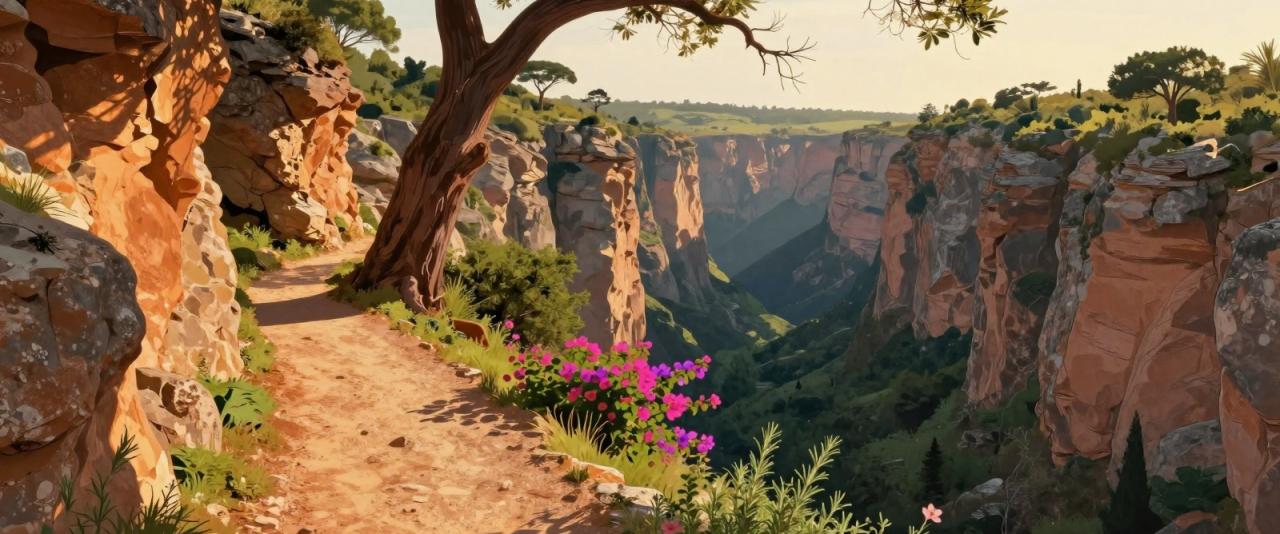
Several of the park's best-known trails are in restricted areas and need a free permit from the regional government (Junta de Andalucía), including the Pinsapar route and the Garganta Verde. Permits are limited in number and are usually arranged in advance through the park's visitor services; book early for weekends and spring. In summer, some trails may be closed or restricted because of fire risk.
Other routes need no permit and are marked from the villages. Bring proper footwear, as limestone paths are uneven and slippery after rain, and carry more water than you think in warm months. Mobile coverage is patchy in deep valleys.
When to go
Spring (March to May) brings green hillsides and wildflowers, and autumn (October and November) is also good for walking. Summer is hot in the valleys, though the higher villages are cooler at night. Winter is mild at lower levels, but the higher parts of the park are cold, wet and occasionally snowy, so check forecasts before walking.
Getting there and getting around
Ronda has a railway station on the line between Algeciras and Granada and Córdoba, and buses connect it with Málaga, Seville and the Costa del Sol. The Grazalema villages are served by limited bus routes, so a car is by far the easiest way to explore. Mountain roads are narrow and winding; allow more time than a map suggests, and avoid driving them after dark if you are not used to them.
A practical plan is to spend one night in Ronda, then two or three nights in a village such as Grazalema or Zahara, using it as a base for walks and short drives.