Why Málaga in winter
Málaga is one of the mildest cities in mainland Spain in winter. Daytime temperatures in December and January are usually comfortable for walking in a light jacket, with cooler evenings, and rain tends to come in short spells. That makes the Christmas season a good time to combine city sightseeing with festive events, without the heat and crowds of summer.
The season runs from the switching on of the lights in late November until Three Kings Day on 6 January, which is the main day for gifts in Spain.
The Calle Larios lights
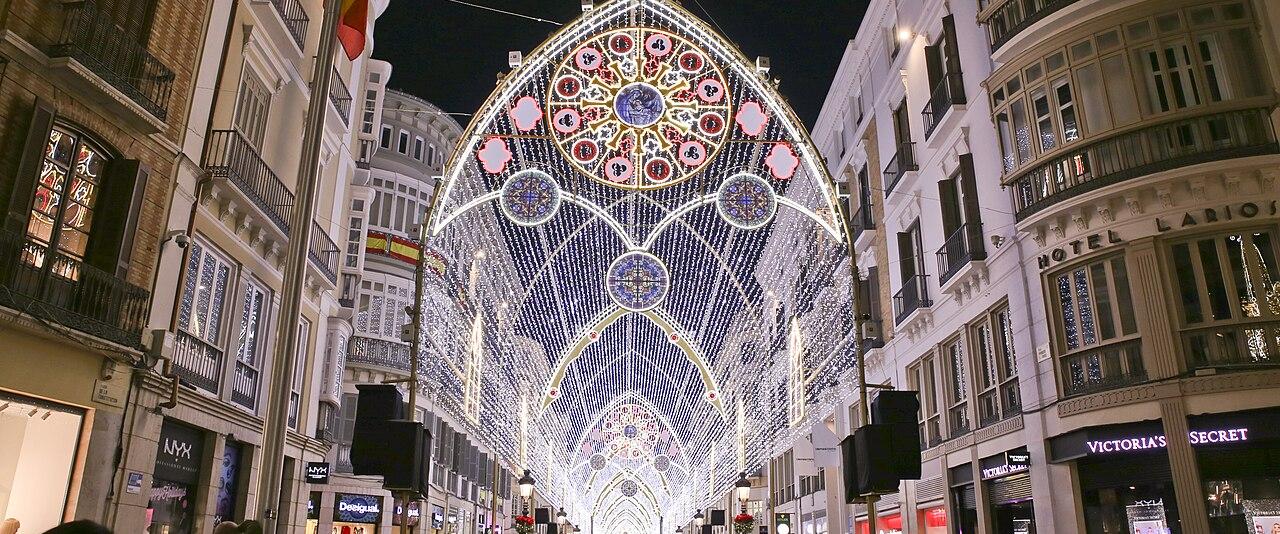
The best-known Christmas event in Málaga is the lighting of Calle Larios, the main pedestrian shopping street running from the Plaza de la Constitución toward the port. Each year the city council installs a large decorative canopy of lights over the street and lights up dozens of other streets and squares in the historic centre.
The lights are switched on in a public event in late November, and on most evenings through to early January the canopy on Calle Larios is synchronised to music in short shows, several times a night. In the 2025 season, for example, the lights were turned on on 28 November and the shows ran three times each evening until 5 January, with a few exceptions such as Christmas Eve and New Year's Eve.
Calle Larios gets extremely crowded during the shows, especially at weekends and in the days around Christmas. If you prefer a calmer view, walk through the street at another time of the evening or come on a weekday. Keep an eye on bags and phones in the crowds.
The city publishes the exact dates and show times each year on its official website, so check before you travel.
Markets, nativity scenes and other events
Every year Málaga has a Christmas market with stalls selling crafts, decorations and seasonal sweets, usually in the city centre or near the port; the location can change, so check the current year's programme.
Nativity scenes (belenes) are an important Andalusian tradition. Churches, public buildings, associations and shops display them, from small tabletop scenes to large models of entire villages, and the city often organises a route of nativity scenes to visit. Other seasonal events have included projections on the cathedral façade and illuminated gardens; these vary from year to year.
Christmas food and drink
Look for traditional Spanish Christmas sweets in bakeries and supermarkets: turrón (nougat, either hard with whole almonds or soft and smooth), mantecados and polvorones (crumbly shortbread-like biscuits, many of them made in Andalusia), and roscón de reyes, a ring-shaped sweet bread eaten on 6 January with a small figure and a dried bean hidden inside.
Málaga is also known for its sweet wines, made from Moscatel and Pedro Ximénez grapes, which locals often drink over the festive season. Many bars and restaurants in the centre serve them by the glass.
Key dates
- Late November: the Christmas lights are switched on.
- 24 December (Nochebuena): Christmas Eve is mainly a family evening; many restaurants close early or open only for set dinners.
- 25 December: a public holiday; many shops and some sights are closed.
- 28 December: the Fiesta Mayor de Verdiales is held in the Puerto de la Torre area on the edge of Málaga, with groups (pandas) performing verdiales, a traditional local folk music with violins, guitars, tambourines and distinctive decorated hats.
- 31 December (Nochevieja): Spaniards eat twelve grapes at midnight, one for each chime of the clock.
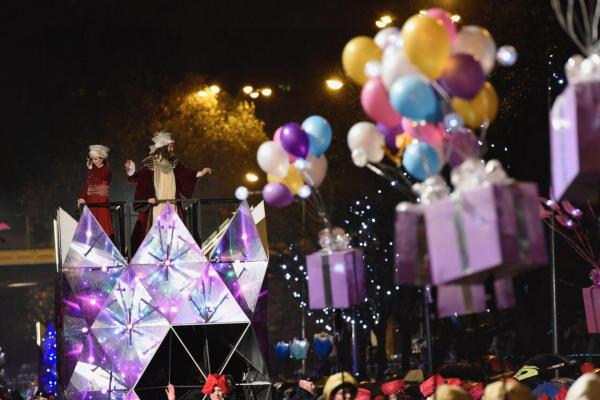
- 5 January: the Three Kings parade (Cabalgata de Reyes) passes through the centre in the evening, with floats throwing sweets to the crowds.
- 6 January: a public holiday and the main day for children's gifts.
Seeing the city in winter
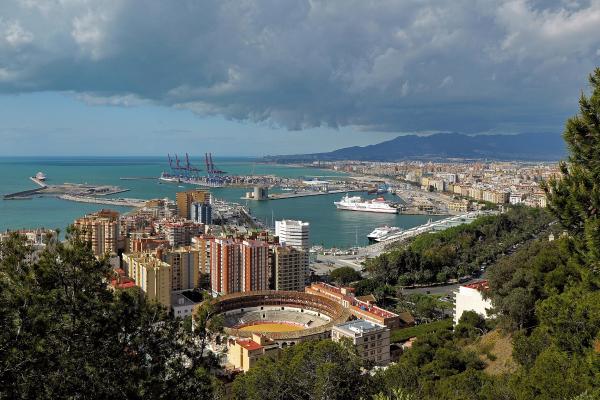
Winter is a good time for Málaga's museums and monuments, which are often less crowded than in summer. The Alcazaba and the Gibralfaro castle above it give views over the port and the city; the climb is easier in cool weather. The cathedral, the Museo Picasso Málaga and the Carmen Thyssen museum make good rainy-day options. The beach at La Malagueta, within walking distance of the centre, is pleasant for a walk on sunny days, though the sea is cold for most swimmers.
Practical tips
- Book accommodation early for the days around Christmas and New Year, when Spanish visitors fill the city.
- Check holiday hours for museums and sights on 24, 25 and 31 December and 1 and 6 January.
- Bring layers. Days can feel warm in the sun, but evenings are cool, and many older buildings are not well heated.
- Plan dinners on 24 and 31 December in advance, as many places close or serve only set menus.