Another Side of the Island
Ibiza's reputation rests on its clubs in Sant Antoni and the Platja d'en Bossa area, but most of the island is rural, with whitewashed churches, pine-covered hills, salt pans and small coves. In 1999 UNESCO listed "Ibiza, Biodiversity and Culture" as a World Heritage Site, covering the fortified old town, Phoenician and Punic archaeology, and the Posidonia seagrass meadows offshore that keep the water so clear. Visiting outside July and August, or simply staying away from the club strips, gives a very different island.
Dalt Vila, the Old Town
Dalt Vila is the walled upper town of Ibiza Town (Eivissa). Its Renaissance walls were built in the 16th century to defend against Ottoman and pirate attacks, and you enter through the Portal de ses Taules gate from the harbour side. Lanes climb to the cathedral at the top, with views over the port and towards Formentera. The steep, cobbled streets are best walked in the morning or around sunset, when it is cooler.
Just outside the old town is Puig des Molins, an ancient necropolis with thousands of Phoenician-Punic tombs, now a museum and archaeological site that is part of the UNESCO listing. Nearer the south coast, the remains of a Phoenician settlement at Sa Caleta are also included.
Es Vedrà and the West Coast
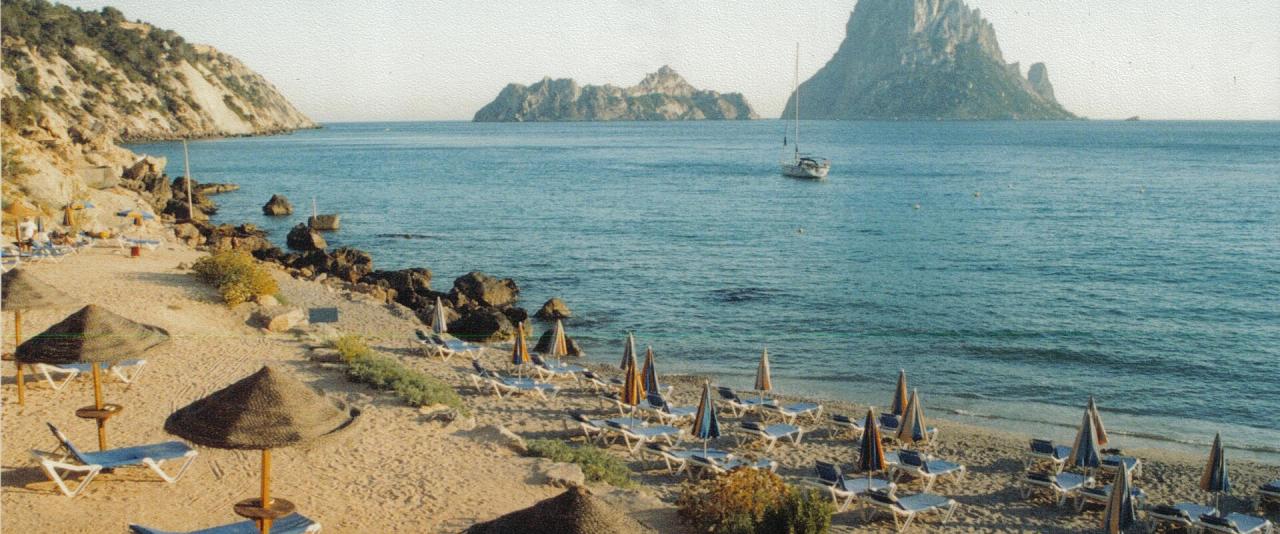
The rocky island of Es Vedrà, rising sharply out of the sea off the south-west coast, is one of Ibiza's most recognisable sights. It is a protected nature reserve and landing on it is not permitted. The usual viewpoints are from the cliffs near the Torre des Savinar watchtower and from the cove of Cala d'Hort, which faces it directly. The west coast as a whole is known for sunsets; Cala Comte has shallow turquoise water and a popular sunset spot, which gets crowded in summer, so arrive early.
Ses Salines and Quieter Beaches
The south of the island is protected as the Ses Salines Natural Park, shared with Formentera, which covers salt pans still worked commercially, dunes, juniper woods and the Posidonia meadows. The pans attract flamingos and other water birds at some times of year. The beaches at Ses Salines and Es Cavallet are popular in summer; walking further along the coast leads to quieter stretches.
In the north, coves such as Cala Xarraca, Portinatx and Benirràs are generally calmer than the south, and Benirràs is known for its Sunday drumming at sunset. For swimming, choose beaches by wind direction: the north coast is sheltered when the wind blows from the south, and vice versa.
Markets, Villages and Walking
Ibiza's hippy markets date back to the 1970s. The best known are the market at Punta Arabí in Es Canar, held on Wednesdays during the season, and Las Dalias near Sant Carles, held on Saturdays. They sell clothes, jewellery and crafts alongside souvenirs.
The interior villages are worth driving through slowly. Santa Gertrudis has a main square with cafés and art galleries; Sant Joan de Labritja is a small northern village with a Sunday market; and many villages have fortified white churches built to shelter residents from pirate raids.
Spring and autumn suit walking, with mild temperatures and wildflowers. The island has signed routes through the countryside and along the coast, and the tourist office publishes route maps. Coastal paths in the south-west and north offer views of the cliffs; carry water, as there is little shade and few facilities on many routes. Road cycling is popular in the cooler months on quiet inland roads.
A Day on Formentera
Formentera, the smaller island to the south, is reached by ferry from Ibiza Town in around half an hour on the fast boats. It is flatter and quieter, with long white-sand beaches such as Ses Illetes, inside the Ses Salines park, and is easily explored by hired bike, scooter or car. In summer the island limits the number of vehicles that can enter, so check the rules before taking a car across. Go early to beat the crowds on the beaches.
Practical Tips
- When to go. May, June, September and October are warm with fewer crowds; many businesses close in winter.
- Tourist tax. The Balearic Islands charge a sustainable tourism tax per person per night, varying by accommodation type and season, paid at your accommodation.
- Getting around. Buses connect the main towns, but a hire car makes the coves and villages much easier to reach.
- Protect the Posidonia. Boats must not anchor on the seagrass meadows, and visitors should not remove plants from the beaches.